Obstacle Analysis
Overview
Geographic Information Systems (GIS) are essential for conducting airspace and obstacle analysis at airports and heliports. By integrating spatial data, digital elevation models (DEMs), FAA Part 77 surfaces, and obstacle databases, GIS empowers aviation professionals to visualize and assess potential hazards to aircraft operations with precision.
Airports and heliports can leverage GIS technology to enhance airspace management, minimize operational risks, and streamline regulatory approvals for construction and development projects. This geospatial approach supports compliance with aviation safety standards, improves obstacle clearance evaluations, and facilitates data-driven decision-making for airport planners and engineers.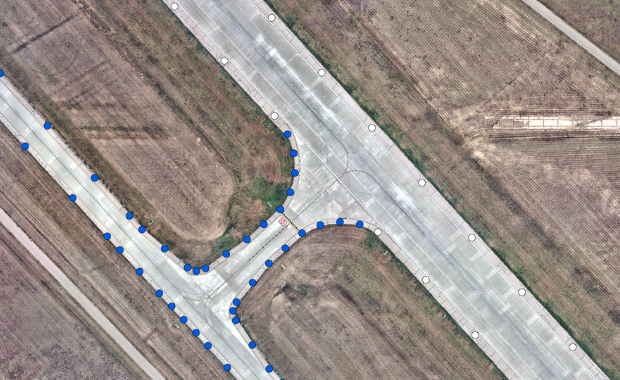
Features
Obstacle Identification and Mapping
Catalog and map obstacles with key attributes to critical surfaces.
Terrain and Elevation Data Integration
Incorporate LiDAR, DEMs (Digital Elevation Models), and other elevation datasets enabling precise analysis of terrain impacts.
3D Airspace Surface Modeling
Visualize regulatory surfaces in three dimensions to assess vertical and horizontal clearance requirements.
Penetration Analysis
Detect and highlight obstacle penetrations to Airport Design and Part 77 surfaces.
Scenario Simulation
Visualize how proposed structures may affect the airport environment.
Benefits
Enhanced Safety
Assess critical airport surfaces to identify and reduce obstacles.
Safeguard Instrument Flight Procedures
Analyze terrain and obstacles affecting instrument procedures to runways.
Real-Time Obstruction Monitoring
Incorporate live data from drones and sensors to track changes that could affect airspace safety.
Use Cases
Airport Master Planning
By overlaying obstruction data with proposed infrastructure (e.g., new terminals, hangars, or taxiways), GIS helps planners avoid conflicts and optimize layouts.
Obstruction Studies
Airports obstruction studies are critical for identifying and evaluating objects that may interfere with aircraft operations or violate protected airspace surfaces. GIS provides clear visualizations using 2D and 3D models that help stakeholders clearly understand obstruction impacts enabling informed decision-making.
Instrument Flight Procedures
GIS supports the visualization and simulation of flight paths in 3D space, allowing designers to test and refine procedures based on real-world geography and airspace constraints. Planners can use GIS to model multiple procedure options and evaluate them based on safety, fuel efficiency, noise impact, and operational feasibility.
Examples


-

- Empty airport terminal lounge with airplane on background. 3d illustration